What New Runners Get Wrong About Eating Around Their C25K Runs
Quick Answer: New runners most often under-fuel before short runs (assuming none is needed) and over-fuel after them (treating a 20-minute jog like it burned a full meal’s worth of calories). A small carb-based snack 30-60 minutes before, and a balanced meal within 2 hours after, covers most C25K sessions correctly.
You’ve finished week 3 of Couch to 5K and you’re either running on empty or overcompensating with a post-run reward that outpaces what the run actually burned. Both patterns are common in new runners, and both are easy to fix once you understand what a 20-30 minute run actually demands from your body.

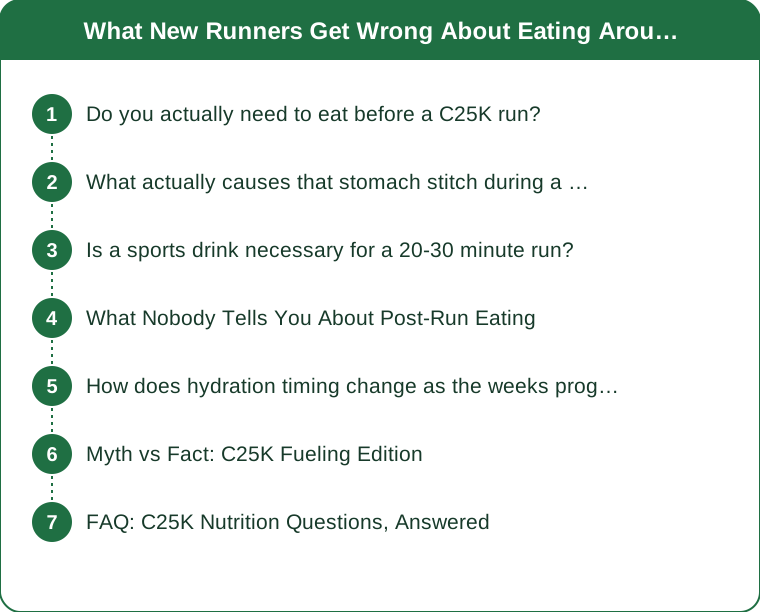
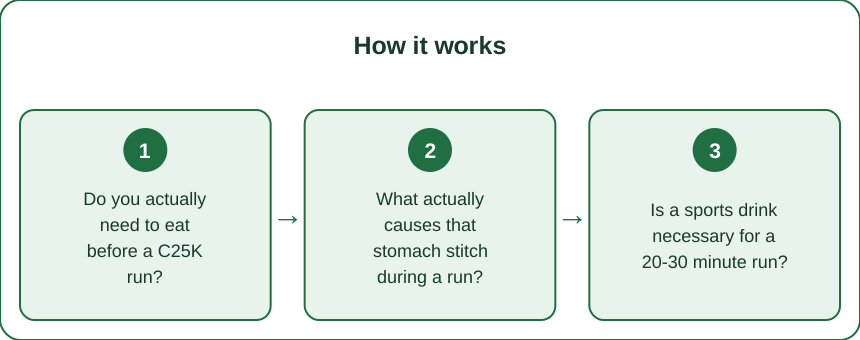
Do you actually need to eat before a C25K run?
For runs under 45 minutes — which covers nearly all of the C25K program — your body can typically run on stored glycogen without needing food beforehand, especially if it’s not been more than 3-4 hours since your last meal. That said, many beginners feel noticeably better with a small, easily digestible carb snack 30-60 minutes prior — half a banana, a few crackers, or a small piece of toast.
The goal is light and simple, not a full meal. A heavy or high-fat meal too close to a run is one of the most common causes of the stitch-in-the-side or nausea that new runners often blame on “just not being a runner.”
Morning runners face a slightly different calculation than evening runners here. If you’re heading out first thing, your body has already been fasting for 7-9 hours overnight, so glycogen stores are somewhat lower than they’d be after a normal day of eating — this is exactly the scenario where a small snack tends to matter most, even for a short run. Evening runners who’ve eaten normally throughout the day usually have enough stored glycogen that skipping a specific pre-run snack matters less.
What actually causes that stomach stitch during a run?
A side stitch is most commonly linked to eating too close to run time, especially a large or high-fat meal that’s still being digested when you start moving, or from shallow breathing patterns common in new runners who haven’t settled into a rhythm yet. Waiting at least 60-90 minutes after a full meal, or sticking to a small snack within an hour, meaningfully reduces this.
If the stitch is frequent, also check your breathing pattern — many beginners unconsciously hold their breath or breathe very shallow from the chest during the running intervals, which contributes independently of what or when they ate.
A quick fix worth trying mid-run: exhale sharply on the foot strike opposite your dominant side (if your right foot lands as you exhale, that’s the pattern to interrupt) — this small adjustment is a commonly recommended trick for interrupting a stitch that’s already started, separate from prevention through eating timing. Staying upright rather than hunching forward while it passes also helps, since hunching compresses the same area that’s cramping.
Is a sports drink necessary for a 20-30 minute run?
No — sports drinks are formulated for endurance efforts generally over 60-90 minutes, where electrolyte and carb replacement genuinely matters. For a C25K session, plain water before and after is sufficient for the vast majority of runners, and the added sugar in sports drinks for a short run is closer to unnecessary calories than a performance benefit.
The exception is running in significant heat and humidity, where electrolyte loss through sweat happens faster — even then, water plus a salty snack afterward typically covers it without needing a specialty product.
There’s also a cost angle worth mentioning: a 20oz sports drink typically runs 120-140 calories and a similar amount of added sugar, which for a 25-minute run burning 200-300 calories total, can offset a meaningful share of the workout’s calorie deficit if weight management is part of the goal. Saving the sports drink for genuinely longer efforts down the road — once the program moves toward a full 5K race and beyond — is both more useful physiologically and avoids adding calories a short run doesn’t need.

What Nobody Tells You About Post-Run Eating
Here’s the part beginner runners consistently overestimate: a 25-minute run at a beginner pace burns roughly 200-300 calories — meaningfully less than the muffin-and-latte reward that often follows it. That’s not a guilt-trip; it’s just useful math, because “I ran today” is not the same caloric event as a long training run, and treating it that way can undo the very goals that got someone running in the first place.
A genuinely useful post-run habit is a small protein-and-carb combination within 2 hours — Greek yogurt with fruit, or eggs with toast — which supports muscle recovery without needing to be a large “earned” meal.
This miscalculation is extremely common and not a personal failing — it comes from how exercise is marketed and how fitness trackers display calorie burns, which are frequently overestimated by wearable devices, sometimes significantly. A useful habit is treating a C25K run as what it actually is at this stage: a fitness and consistency-building activity, not yet a significant calorie-burning event. That framing changes both around evening meals and helps prevent the common beginner pattern of quitting a few weeks in when the number on the scale hasn’t moved despite consistent runs.
How does hydration timing change as the weeks progress?
As C25K intervals get longer in the later weeks, especially once continuous running passes the 20-minute mark, hydration timing starts to matter more than it did in week 1. Drinking 16-20 oz of water 1-2 hours before a run, rather than chugging right beforehand, allows better absorption and avoids the sloshing, uncomfortable-stomach feeling some new runners report.
A small amount (a few sips) right before starting is fine, but front-loading hydration earlier in the day is the more effective habit to build as the program progresses toward the final continuous 30-minute runs.
A simple way to check daily hydration status without overthinking it: pale yellow urine generally indicates adequate hydration, while dark yellow suggests you’re behind and should front-load more water earlier in the day rather than trying to catch up right before a run. This matters more in the later C25K weeks specifically because longer continuous efforts in the heat compound dehydration’s effects on perceived effort — a run that should feel like steady progress can feel unexpectedly hard purely from being under-hydrated going in.
Myth vs Fact: C25K Fueling Edition
Myth: You need to carb-load before every C25K run. Fact: Carb-loading is a strategy for endurance events lasting well over an hour — it’s unnecessary and can feel heavy and counterproductive before a 20-30 minute beginner run.
Myth: Running on an empty stomach is always better for fat burning. Fact: While some runners do fine fasted for short efforts, there’s no strong evidence this meaningfully improves fat loss over time, and feeling lightheaded or weak during a run — which happens to some beginners fasted — undermines the workout more than it helps.
Myth: You should avoid all carbs before running if you’re trying to lose weight. Fact: A small carb snack before a run typically improves the quality and consistency of the workout itself, and a better, more consistent training session generally supports weight goals more than skipping 100-150 calories of pre-run fuel does.
Myth: More protein right after every run is essential for beginners. Fact: Protein timing matters far more for people training with heavy resistance multiple times a week — for a 20-30 minute jog, overall daily protein intake matters more than hitting a tight post-run window.
FAQ: C25K Nutrition Questions, Answered
What’s the best snack to eat right before a Couch to 5K run?
Half a banana, a few plain crackers, or a small piece of toast about 30-60 minutes beforehand — simple, easily digestible carbs work best for most beginners.
Should I eat differently on rest days versus run days?
Not dramatically — a generally balanced diet with adequate protein supports both recovery on rest days and performance on run days; the main difference is timing your last meal relative to a scheduled run, not the food itself.
Is it normal to feel hungrier on C25K run days?
Yes, especially as the continuous running portions extend in later weeks — a modest increase in appetite is a normal response to increased activity, not something to suppress.
Do I need electrolyte supplements for a program this short?
Generally no — electrolyte losses from a 20-30 minute run are typically small enough that a normal diet replaces them without a specialty product, except in unusually hot or humid conditions.
TL;DR:
- Most C25K runs (under 45 minutes) don’t require pre-run food, but a small carb snack 30-60 min before helps many beginners
- Skip sports drinks for these run lengths — plain water covers it
- A 25-minute beginner run burns roughly 200-300 calories, well under most post-run “reward” foods
- Front-load hydration hours before running rather than right beforehand to avoid stomach discomfort
Track how you feel with a small snack versus none for your next few runs — the right answer is genuinely individual, and a week of noticing beats guessing.
Keep Reading
This article is for general informational purposes only and is not medical advice. Always consult a qualified health professional for guidance specific to you.