The C25K Mind Game: Week-by-Week Psychology of Becoming a Runner
Couch to 5K’s intervals train the legs on schedule — but the head runs its own program, and nobody maps it: the week-one self-consciousness, the week-five double-length panic, the day ‘a runner’ stops feeling like a costume. The psychological mile markers, mapped.

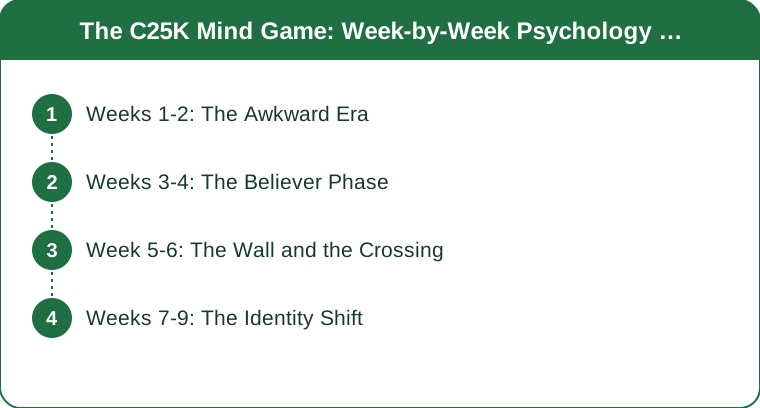
Weeks 1-2: The Awkward Era
The opening mental load: the everyone’s-watching feeling (nobody is — the spotlight effect at jogging pace; every runner who passes you once wore your exact self-consciousness, and runners’ actual reaction to beginners is quiet approval), the is-this-even-working doubt (60-second jogs feel too small to count — they’re not; the program’s genius is starting below your doubt threshold), and the era’s one job (show up three times weekly — the intervals are almost irrelevant; the calendar is the actual workout; the identity foundation is attendance, not pace).
Weeks 3-4: The Believer Phase
The first compounding: the intervals stretch and mostly… work (the program’s early promises land — five-minute jogs that would have been fiction in week one just happen; the trust-the-program muscle builds here, and it’s the muscle week five needs), the body’s small announcements (stairs feel different; the resting heart rate ticks down; sleep deepens — log them, they’re the receipts), and the routine crystallization (the running days become calendar fixtures — protecting them now is cheap; re-establishing them later is expensive).

Week 5-6: The Wall and the Crossing
The program’s famous cliff: the week-five run three (the twenty-minute continuous run after a program of intervals — every C25K forum thread converges here; the panic is universal and the secret is universal too: it’s a PACE test, not a fitness test — slow beyond slow, embarrassingly slow, and it happens), the walk-break absolution (needing one doesn’t restart anything — repeat the run, still on schedule; the program is a ladder, not a conveyor), and the other side (finishers of the twenty describe the same thing: the moment the doubt lost the argument — week six runs on that memory).
Weeks 7-9: The Identity Shift
The quiet transformation: the costume stops being one (somewhere in the continuous-run weeks, ‘I’m doing a running program’ becomes ‘I run’ — the identity research says this shift predicts long-term adherence better than any fitness marker; notice the day it happens), the pace-curiosity awakening (the first time you wonder how fast — safe to explore AFTER the finish line; the program’s one ask is finishing first), the graduation planning (the actual 5K event booking — the finish-line photo converts the program into a story), and the day-after question (the answer menu: consolidate, go longer, go faster, or just… keep running Tuesday-Thursday-Saturday forever — the maintenance jog is a complete running life, and week one’s you would be amazed by all of it). The legs were trained by the intervals; the runner was built by the Tuesdays.
Attendance is week one’s only job, trust the ladder, week five is a pace test, notice the identity day. C25K trains two things — and the runner is the one that lasts.
Keep Reading
This article is for general informational purposes only and is not medical advice. Always consult a qualified health professional for guidance specific to you.