How to Adjust Your Couch to 5K Plan When Life Actually Gets in the Way
Quick Answer: Missing sessions during Couch to 5K doesn’t mean starting the whole program over — the right adjustment depends on how much time has passed and how many sessions were missed, ranging from simply repeating the last completed week to a partial step-back, and almost never requires returning all the way to week one.
You were three weeks into Couch to 5K, then a busy work stretch, a cold, or a trip knocked out ten days of training — and now you’re staring at the plan wondering whether all that progress just evaporated. It didn’t, but the right next step depends on specifics worth understanding clearly.

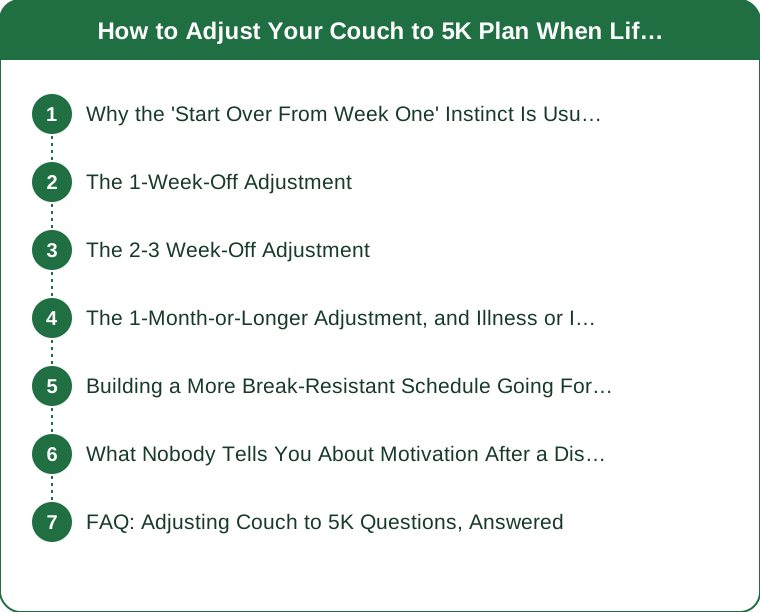
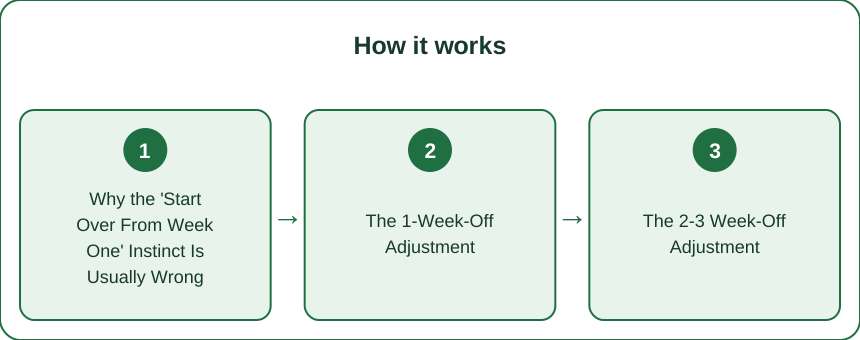
Why the ‘Start Over From Week One’ Instinct Is Usually Wrong
Cardiovascular fitness built over several weeks of consistent training doesn’t disappear after a week or two off — some detraining does occur, but it’s gradual and partial, not a full reset to zero. Treating a short break as requiring a full restart usually means unnecessarily repeating weeks of progress you’d already made, which can be discouraging enough to derail motivation entirely.
The 1-Week-Off Adjustment
After a break of about a week (roughly 2-3 missed sessions), the most common recommendation is simply repeating the last fully completed week rather than advancing to the next one — this gives your body one more week at a fitness level you’d already handled well, without losing meaningful ground.
The 2-3 Week-Off Adjustment
After a longer break — two to three weeks — stepping back one to two weeks in the program (not to week one, but to an earlier point you’d already comfortably completed) accounts for a bit more detraining while still respecting the fitness base you built. This is a moderate reset, not a full one.

The 1-Month-or-Longer Adjustment, and Illness or Injury Breaks
After a month or more away, more significant detraining has likely occurred, and restarting from roughly the midpoint of where you left off (rather than either extreme) is a reasonable middle ground — full restart from week one is rarely necessary even here unless the break was several months.
If the break was due to illness or injury specifically (not just a busy schedule), a more conservative return is warranted, since the body may need extra easy sessions to confirm full recovery before resuming interval-based training — checking in with a doctor before resuming is worth it after any illness involving fever or an injury involving pain.
Building a More Break-Resistant Schedule Going Forward
Building one flexible ‘catch-up’ day into each week of the plan (rather than a rigid three-fixed-days schedule) makes future disruptions far less likely to derail the whole program, since a single missed day has an obvious make-up slot already built into the week.
What Nobody Tells You About Motivation After a Disrupted Plan
The psychological hit of feeling like you ‘failed’ the plan after a disruption often does more damage to long-term adherence than the physical detraining itself — reframing a missed stretch as a normal, expected part of a multi-week program (which it is, for most people) protects motivation better than treating it as a personal failure.
FAQ: Adjusting Couch to 5K Questions, Answered
How do I know exactly how far back to step in the program after a break?
As a general rule, one week back per week of missed training up to about three weeks, and closer to the midpoint of the program for longer breaks — but listening to how the first session back actually feels matters more than following an exact formula.
Is it normal to feel like the same week is harder the second time around after a break?
Yes, this is common and doesn’t mean you’ve lost all your progress — some added effort in the first session or two back is expected and typically eases within a session or two.
Should I be worried about shin splints or injury risk when resuming after a break?
Easing back in with slightly more walk time than the original week called for, especially after two or more weeks off, is a reasonable precaution against the injury risk of jumping back to full intensity too quickly.
TL;DR:
- Short breaks (about a week) usually just mean repeating the last completed week, not restarting
- Longer breaks (2-4+ weeks) warrant a moderate step-back, rarely a full restart to week one
- Illness or injury breaks deserve a more conservative, doctor-checked return than a busy-schedule break
- Building a flexible catch-up day into the weekly schedule prevents future disruptions from feeling like failures
A disrupted training plan is a normal part of most real Couch to 5K journeys, not a sign the whole effort was wasted — the right adjustment almost always keeps far more progress than it costs.
Keep Reading
This article is for general informational purposes only and is not medical advice. Always consult a qualified health professional for guidance specific to you.