Running in the Heat as a New Runner (Why Your Easy Pace Suddenly Feels Hard)
New runners often conclude they have lost fitness when a run that felt manageable last month becomes a struggle — and frequently the only variable that changed was the temperature. Heat costs you far more than most people expect. Here is why it changes everything, how to adjust, and how to stay safe.

Why Heat Changes Everything
The physiological cost: the the-your-body-diverts-blood-to-cooling (the body prioritising cooling over working muscles from the complete-guide logic — the cooling-takes-priority), the the-heart-rate-rises-at-the-same-pace (the same pace producing a higher heart rate from the complete-guide logic — the higher-heart-rate), the the-perceived-effort-jumps (the effort feeling substantially harder from the mistakes logic — the effort-jumps), the the-humidity-makes-it-worse (the humidity preventing sweat from cooling you from the complete-guide logic — the humidity-worsens), the the-it-is-not-lost-fitness (the the change being environmental rather than fitness loss from the week-by-week logic — the not-lost-fitness), and the reframe (the hot-weather struggle as environmental rather than a fitness problem — your body diverting resources to cooling, which raises heart rate and effort at the same pace).

How to Adjust
Adapting the run: the the-slow-down-deliberately (the deliberately slowing the pace in heat from the complete-guide logic — the slow-down), the the-run-by-effort-not-pace (the running to effort rather than to pace targets from the week-by-week logic — the effort-not-pace), the the-shift-to-early-morning-or-evening (the moving runs to the coolest part of the day from the treadmill-vs-outdoor logic — the cooler-hours), the the-shorten-the-session-if-needed (the shortening rather than abandoning the run from the mistakes logic — the shorten-not-abandon), the the-hydrate-before-during-and-after (the hydrating around the run, not just after from the complete-guide logic — the hydrate-around), the the-light-and-loose-clothing (the light-coloured, loose, wicking clothing from the complete-guide logic — the light-clothing), the the-use-the-treadmill-when-it-is-extreme (the moving indoors in extreme heat from the treadmill-vs-outdoor logic — the treadmill-when-extreme), and the the-give-yourself-two-weeks-to-acclimatise (the allowing a couple of weeks to adapt to heat from the week-by-week logic — the acclimatisation-window).
The Safety Notes
Staying safe: the the-know-the-overheating-signs (the recognising dizziness, chills or stopping sweating from the complete-guide logic — the overheating-signs), the the-stop-if-you-feel-unwell (the stopping immediately rather than pushing through from the mistakes logic — the stop-if-unwell), the the-carry-water-on-longer-runs (the carrying fluids on anything long from the complete-guide logic — the carry-water), the the-avoid-the-hottest-hours (the avoiding the peak heat of the day entirely from the complete-guide logic — the avoid-peak-heat), the the-sun-protection (the sunscreen, a cap and sunglasses from the complete-guide logic — the sun-protection), the the-tell-someone-your-route (the telling someone your route in extreme conditions from the complete-guide logic — the tell-someone), the the-do-not-judge-your-progress-by-heat-runs (the not evaluating your programme by hot-weather runs from the week-by-week logic — the do-not-judge-progress), and the frame (the heat as a variable to run around rather than through — slowed deliberately, run by effort, shifted to cooler hours and hydrated throughout — why your easy pace suddenly feels hard. Slow down deliberately, run by effort not pace, move to cooler hours, hydrate around the run, and stop if you feel unwell.)
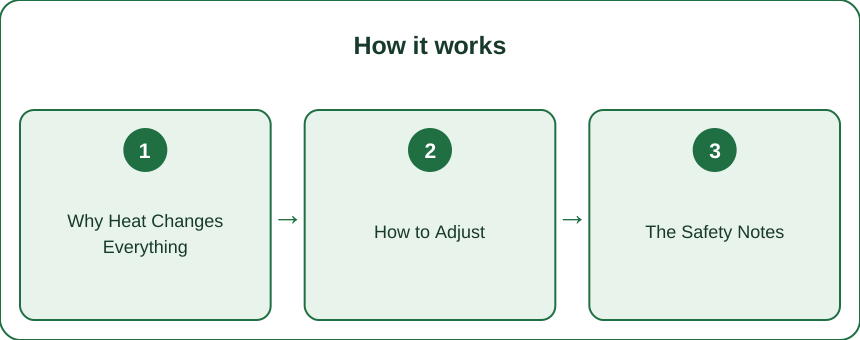
New runners often conclude they have lost fitness when a run that felt manageable last month becomes a struggle — and frequently the only variable that changed was the temperature. Heat changes everything because your body diverts blood to cooling, heart rate rises at the same pace, perceived effort jumps, humidity makes it worse, and it is not lost fitness. Adjust by slowing down deliberately, running by effort not pace, shifting to early morning or evening, shortening the session if needed, hydrating before during and after, wearing light and loose clothing, using the treadmill when it is extreme, and allowing two weeks to acclimatise. Stay safe by knowing the overheating signs, stopping if you feel unwell, carrying water on longer runs, avoiding the hottest hours, using sun protection, telling someone your route, and not judging your progress by heat runs.
Keep Reading
This article is for general informational purposes only and is not medical advice. Always consult a qualified health professional for guidance specific to you.